The photovoltaic energy curve
The history of solar energy in the Alentejo is not a sudden phenomenon, but a curve that gained a steep inclination starting in 2021. According to data from the Directorate-General for Energy and Geology (DGEG), by the end of that year, the Alentejo already concentrated 43.3% of the national photovoltaic power, with 714 MW installed out of a total of 1648 MW nationwide. This period marks the moment when the region consolidated itself as the main solar production hub in Portugal.
To understand the scale of this change, one only needs to look at national photovoltaic energy production: in 2015, Portugal produced 800 gigawatt-hours, a figure that rose to 5600 gigawatt-hours in 2024, according to DGEG. This trajectory of almost seven times more production in a decade reflects a strategic commitment that found in the Alentejo, due to its high solar exposure and availability of flat terrain, the ideal setting for the installation of large-scale parks.
In 2026, the national scenario shifted to a new level, with Portugal reaching 7.2 GW of installed solar capacity, surpassing for the first time the national wind power, which stood at 6.2 GW, according to the Mission Structure for the Licensing of Renewable Energy Projects 2030. This leadership inversion in renewable sources places the Alentejo at the center of territorial pressure which, although technical, alters the landscape we have known for generations.
Where the panels are installed
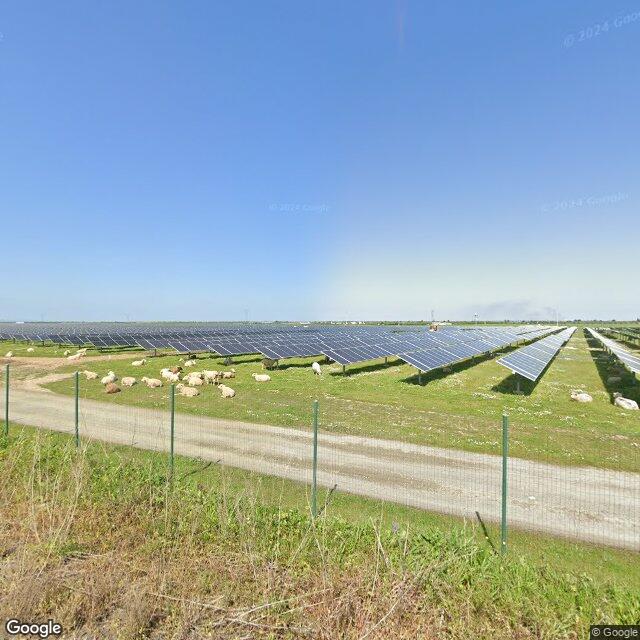
Land occupation is not uniform, concentrating in transition zones and areas with variable agricultural aptitude. In the municipality of Évora, for example, the Juntos pelo Divor Citizen Platform indicated in 2025 that three projected mega solar power plants total more than 1,300 hectares of occupied area, representing about 1% of the municipality's total surface. This figure helps put the local impact into perspective: it is not a total occupation of the municipality, but a significant concentration in specific points.
Another example of the complexity of this occupation is found in the Sado Photovoltaic Solar Complex. According to the Portuguese Environment Agency (APA) SIAIA Report from 2025, although the identified study area amounts to 21,028 hectares, the fenced implementation area is 1,272 hectares, with the strict area occupied only by solar panels being 356 hectares. This distinction is crucial to understand that the total area of a project is not synonymous with waterproofed soil or soil entirely removed from agriculture.
The management of this territory is guided by planning instruments that try to reconcile the need for energy with soil preservation. The proposal for the Sectoral Program for the Acceleration Zones for the Implementation of Renewable Energies (PSZAER), from 2026, identified more than 65 thousand hectares with potential to install solar and wind power plants in the Alentejo. This mapping serves as the basis for future licensing, seeking to direct investment toward areas with lower ecological sensitivity.
The myth of massive expropriation
The most obvious reading suggests that the Alentejo is being entirely converted into a power plant, with the widespread loss of high-quality arable soil. However, data from the 2026 PSZAER reveal a more contained reality: in the Alentejo Central sub-region, the program mapped 46 potential zones for solar energy, covering exactly 2.69% of the total surface of that territory. This value, while representative, is far from configuring a total occupation or a massive expropriation of the entire region.
The licensing strategy has favored, in many cases, lands of lower agronomic aptitude, riverbank margins, or transition areas, avoiding the most fertile irrigated zones. In 2022, APA and DGEG signed a joint dispatch exempting solar projects located in artificialized areas from prior Environmental Impact Assessment, a measure aimed at accelerating installation in zones where agricultural impact is null or reduced, diverting pressure from intensive cultivation areas.
Friction over land use appears to be more localized than generalized, affecting mostly heathlands, hills, or agricultural transition areas. While public debate focuses on the loss of soil, the Mediterranean Institute for Agriculture, Environment and Development (MED) of the University of Évora pointed out, in 2023, that the decline of the montado in the Alentejo reaches about five thousand hectares per year, a phenomenon that, by itself, has an impact on the landscape and regional economy much greater than the direct occupation by solar parks.
The impact on the local economy
The installation of solar parks brings the promise of investment, but raises questions about local job creation. In 2026, the analysis of installed capacity shows that, despite the 40% growth recorded in 2024, the maintenance of these power plants requires little permanent labor. The challenge for the 47 Alentejo municipalities is not only land use, but the ability to transform these gigawatts into added value for the populations living in the territory.
Comparison with other economic activities is inevitable. While intensive agriculture, which occupies vast areas, is an engine of seasonal and permanent employment, solar parks function as low human-density infrastructures. In 2023, the Sustainable Earth System Association (Zero) warned of the need for planning that does not sacrifice biodiversity in Ferreira do Alentejo, where the Serra do Paço is seen as an example of a transition zone where the balance between energy and agriculture is being tested.
The future of land use in the Alentejo will be dictated by how the 2026 PSZAER is implemented in the coming years. With 65 thousand hectares identified as potential for renewable energies, the region has a clear roadmap. The central issue for local mayors and the regional government is to ensure that the installation of these power plants does not compromise the long-term sustainability of the territory, balancing the national decarbonization goal with the preservation of Alentejo rural identity.
What it means for the Alentejo
кульпThe Alentejo is undergoing a paradigm shift where the sun, previously seen only as a resource for agriculture, is now the primary raw material for the energy industry. With 2.7 gigawatts of installed capacity in 2024, the region is no longer just the breadbasket of Portugal, but a pillar of national energy security. This transformation, however, demands constant vigilance over land use, so that the energy transition does not become an irreversible cost to natural heritage.
For those living in the Alentejo municipalities, the impact is visible in the landscape, but the real scale of occupation is more contained than popular fear suggests. The occupation of about 2.7% of the mapped zones in Alentejo Central, according to 2026 data, shows that a vast territory still maintains its original vocation. The challenge for the coming years will be to manage coexistence between the panels and the montado, ensuring that economic development does not erase the region's agricultural history.
The growth curve of solar energy, which became steeper starting in 2021, shows no signs of slowing down. What will change in the near future will depend on the effectiveness of planning instruments, such as PSZAER, and the ability to integrate these infrastructures without altering the character of the territory. The Alentejo of 2030 will inevitably be a territory where energy and land must share space in a more harmonious way than what was seen in the initial phase of this solar rush.